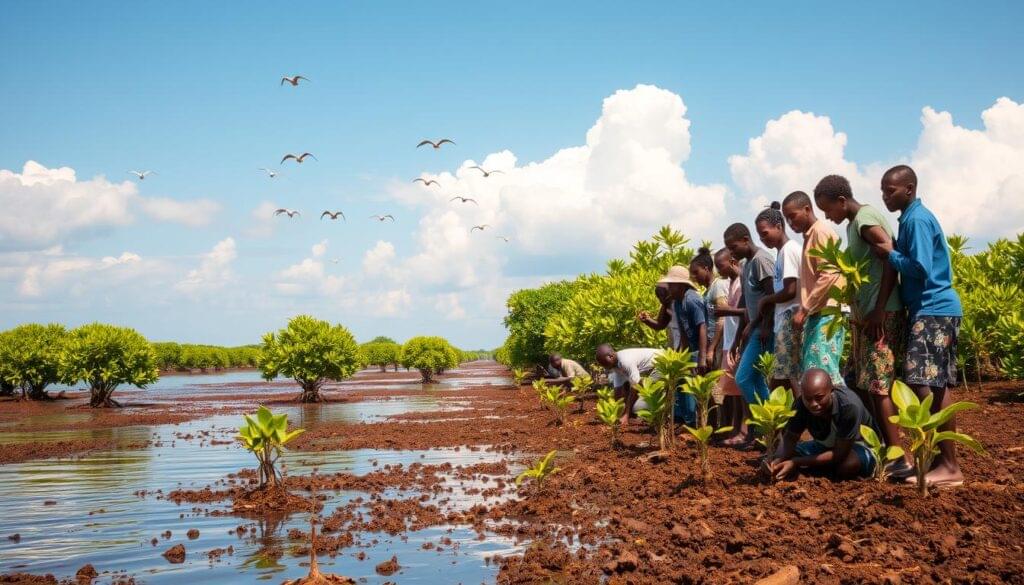
Along Kenya’s stunning coastline, mangrove forests play a key role in fighting climate change. They protect our shores from erosion and support a wide range of wildlife. Unfortunately, these natural treasures are disappearing at a rapid pace.
We must take action to stop this loss. By focusing on Mangrove Restoration in Kenya, we can ensure a better future for our coastal communities. This effort goes beyond just planting trees; it requires understanding local environmental needs.

We aim to show how these habitats are vital for economic stability. We will look at the threats they face and successful community-led projects. Together, we can safeguard these habitats for future generations.
Key Takeaways
- Coastal forests act as a natural defense against rising sea levels and erosion.
- Local communities play a central role in the success of environmental recovery projects.
- Healthy marine ecosystems are directly linked to regional economic stability.
- Active management helps preserve biodiversity in vulnerable shoreline areas.
- Sustainable development requires a balance between human needs and nature conservation.
The Vital Role and Current Status of Mangroves in Kenya
Kenya’s coastline is home to lush mangrove forests. These forests are like the lungs of the ocean. They act as indispensable carbon sinks, storing a lot of carbon in their roots, trunks, and soil.
Understanding Mangrove Ecosystems
Mangrove forests are more than just carbon storage. They provide vital habitats for fish, crustaceans, and birds. They also protect our shores from storms and erosion.
Healthy mangroves are key to a strong marine economy.
The Declining State of Kenya’s Coastal Forests
The status of mangrove forests kenya is getting worse. Human actions and environmental changes are causing their loss. If we don’t act fast, it will harm our biodiversity.
Major Threats to Our Mangroves
Several factors are harming our coastal ecosystems. We need to tackle these challenges to save our mangroves.
Unsustainable Harvesting Practices
Local communities’ high demand for timber and fuel leads to over-harvesting. This can destroy the forest structure.
Coastal Development and Urban Expansion
Coastal urbanization and infrastructure projects harm mangrove habitats. They destroy natural barriers that protect our inland areas.
Pollution and Industrial Runoff
Agricultural runoff and industrial waste pollute our coastal waters. This pollution harms tree growth and marine life.
The Escalating Impact of Climate Change
Rising sea levels and temperatures make our forests more vulnerable. Mangroves need to move inland but urban development blocks their way.
| Threat Type | Primary Impact | Severity Level |
|---|---|---|
| Unsustainable Harvesting | Loss of forest density | High |
| Urban Expansion | Habitat fragmentation | Critical |
| Pollution | Reduced water quality | Moderate |
| Climate Change | Sea-level rise stress | High |
The Multi-Faceted Benefits of Mangrove Restoration in Kenya
Our work on coastal ecosystem restoration is key to sustainable growth along Kenya’s coast. By bringing back these forests, we help nature and human progress go hand in hand. This effort is vital for facing environmental changes.
Environmental Advantages of Healthy Mangroves
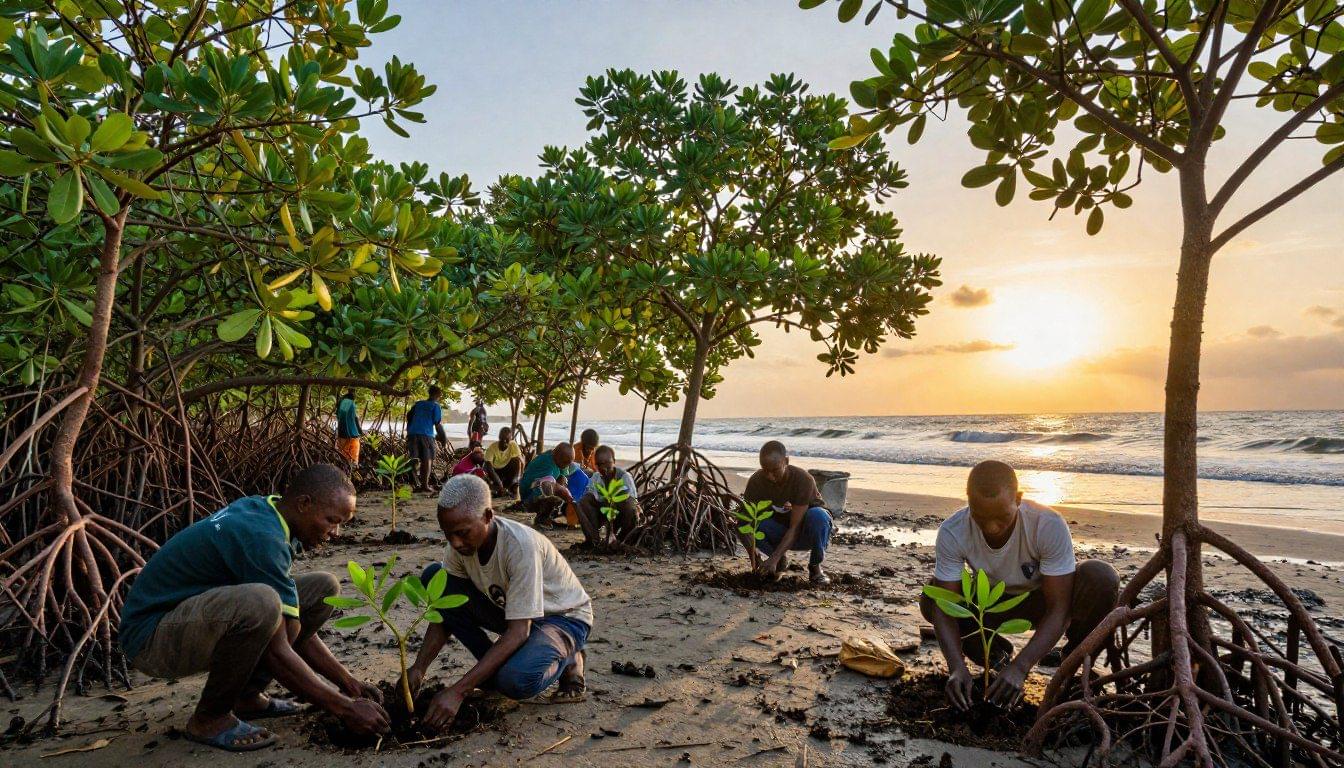
Healthy mangroves are like the lungs of our coast, providing services that man-made things can’t match. They play a big role in our efforts to fight climate change mitigation kenya.
Carbon Sequestration and Blue Carbon
Mangroves are great at pulling carbon dioxide out of the air. These blue carbon ecosystems store lots of carbon in their roots and soil. This keeps it out of the air for a long time.
Coastal Protection Against Erosion
The roots of mangroves act as a shield against the ocean’s power. They lessen wave energy, protecting our shores from erosion and storm surges.
Biodiversity Conservation and Habitat Creation
These forests are a home for many species, including rare birds and marine life. By restoring these habitats, we protect Kenya’s unique wildlife for the future.
Water Quality Improvement
Mangroves clean our coastal waters by trapping sediments and absorbing nutrients. This stops harmful algal blooms and keeps our seas healthy.
Economic Empowerment for Local Communities
Restoring our forests is more than just saving the environment; it’s a way to make money. We think that climate change mitigation kenya should help the people living near these shores.
Supporting Sustainable Fisheries
Mangroves are key nurseries for fish and shellfish, important to our local economy. Protecting these areas helps our fishing communities by providing food and income.
Unlocking Eco-Tourism Opportunities
The beauty of restored mangrove forests draws visitors worldwide. This boosts eco-tourism, creating jobs for local guides, hospitality workers, and conservationists.
Building Sustainable Livelihoods
Investing in blue carbon ecosystems creates green jobs that care for the environment. These jobs offer stable income and empower locals to protect their natural resources.
| Benefit Category | Primary Impact | Community Outcome |
|---|---|---|
| Environmental | Carbon Sequestration | Climate Resilience |
| Physical | Erosion Control | Infrastructure Safety |
| Economic | Fisheries Support | Increased Income |
| Social | Eco-Tourism | Job Creation |
Implementing Community-Led Mangrove Restoration
We believe the future of our coastlines depends on local people. True coastal ecosystem restoration needs a strong commitment from those who live there. They manage and interact with these vital resources every day.
By giving local communities ownership, we ensure both environmental and social progress. This turns conservation into a shared mission, not just a top-down order.
The Mechanics of Successful Restoration Projects
Successful projects need more than just planting saplings. They require a holistic strategy. We focus on capacity building and creating jobs for residents.
When communities see economic benefits from healthy forests, they protect the land well. This approach keeps restored sites healthy, unlike neglected areas.
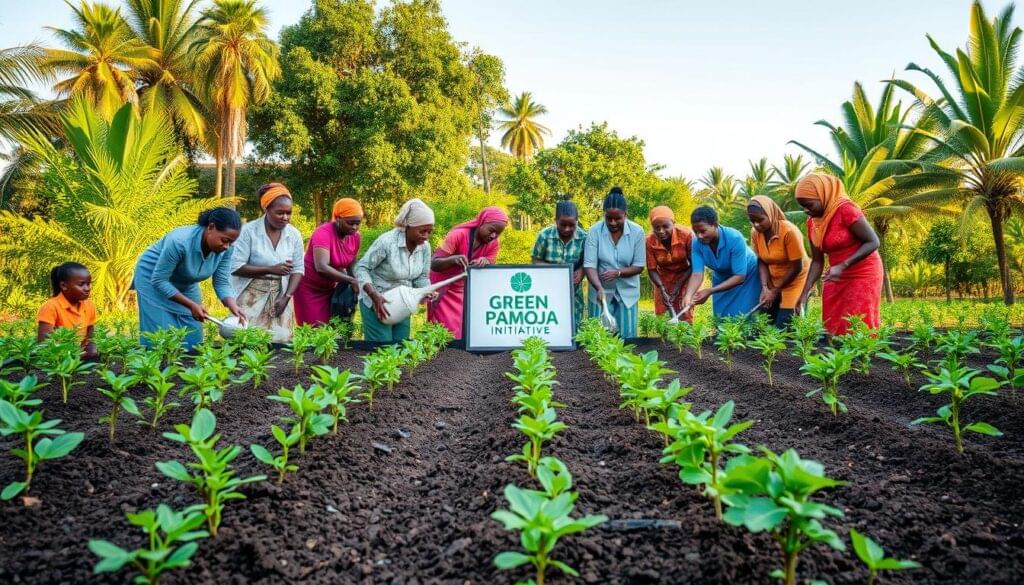
Green Pamoja’s Role in Mangrove Restoration
At Green Pamoja, we help change by working with coastal villages. The Vanga Blue Forests project benefits about 9,000 people in Vanga, Jimbo, and Kiwegu.
Our work shows that mangrove conservation kenya thrives when it meets local needs. We offer technical help and resources to restore mudflats into forests.
Our Approach to Seedling Propagation
We start with community-managed nurseries. We train locals to pick the right species and care for them until they’re ready for the coast.
Monitoring is key. We track seedling growth with community members. This ensures each plant has a good chance to grow into a healthy tree.
Engaging Local Stakeholders in Conservation
We involve local stakeholders in every step. This ensures our efforts are fair and sustainable. Village leaders and youth groups help build a lasting culture of stewardship.
This model makes our restoration efforts both environmentally and economically viable for Kenya. When the community leads, the forest grows stronger.
Navigating Challenges and Future Opportunities
The journey ahead is tough, but we’re finding new ways to help the Kenyan coast. We know big restoration needs us to tackle big challenges. These challenges have slowed us down before.
Overcoming Barriers to Large-Scale Restoration
We need to try new things to succeed. Adaptive management is key. It lets us learn from past mistakes and do better next time. This is critical for fighting climate change mitigation kenya and getting lasting results.

We’re also working to make rules easier to follow. This will help us do more restoration work. By teaming up with others, we can make sure our efforts match national goals. This helps protect our blue carbon ecosystems and makes big projects possible.
How Individuals and Organizations Can Help
Every bit counts in making our coastline stronger. Projects like the Go Blue Project are already helping. They create jobs for thousands of young people and women. Supporting these community conservation projects helps our economy grow in a green way.
“The restoration of our mangroves is not just an environmental necessity; it is a commitment to the prosperity of our coastal communities and the health of our planet.”
Donating to Support Restoration Efforts
Money helps us buy what we need to grow mangroves. Your donations help us give local teams the tools and training they need. This is how we keep our forests healthy.
Volunteering and Field Participation
Getting involved lets you see the real difference we make. We invite you to join us for planting and upkeep. It’s a great way to connect with nature and our community.
Forming Strategic Partnerships
Companies can help a lot by teaming up with us. Strategic partnerships let us share knowledge and resources. Together, we can make sure our coastal areas are both healthy and thriving.
Conclusion
We are at a key moment for our marine ecosystems’ survival. The health of our coasts affects the well-being of coastal communities. Every effort to restore these habitats is a gift to future generations.
Getting involved in mangrove planting is a strong step towards climate resilience. These trees protect against high tides and are vital for marine life. Our dedication to this mission keeps Kenya’s natural beauty alive.
We urge you to join us in protecting our environment. You can help by donating, volunteering, or working with Green Pamoja. Your support will help us expand these important projects along the coast. Together, we can safeguard our shores and create a sustainable future for all Kenyans.
FAQ
Why are mangrove forests kenya so vital to our coastal environment?
Mangrove forests are key for our coast. They act as indispensable carbon sinks and are vital for marine life. By focusing on coastal ecosystem restoration, we protect our homes and buildings from erosion and storms.
What are the primary threats currently facing mangrove conservation kenya?
Our mangroves face threats from timber and fuel needs. Coastal growth and farming harm them too. Rising seas and heat add to these problems.
How does mangrove planting contribute to climate change mitigation kenya?
Mangroves are top blue carbon ecosystems. By planting them, we help fight climate change kenya. They absorb carbon better than many forests, making our environment stronger.
What is the role of Green Pamoja in these community conservation projects?
At Green Pamoja, we work on community conservation projects. We build skills and create jobs. We involve locals in every step, making sure it’s fair and works for everyone.
What are the economic benefits of restoring these coastal forests?
Healthy mangroves help sustainable fisheries and boost eco-tourism. They bring jobs and income to coastal communities. This creates a future where people and nature can both thrive.
How can individuals and organizations help overcome the barriers to large-scale restoration?
We can beat barriers with strategic partnerships and smart management. People and groups can help by giving resources. This lets us grow our efforts and keep mangrove conservation kenya going strong.